How to Prepare for Your First Clinical Rotation Shift
Clinicals & Simulation · September 26, 2026
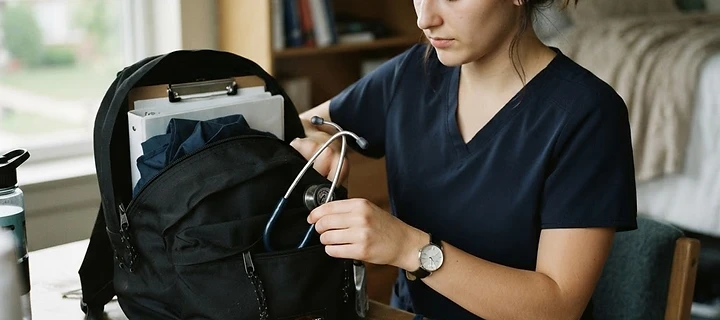
Preparing for your first clinical shift requires more than just a clean uniform. Learn the essential steps to stay organized and calm during your debut on the unit.
Your first clinical shift is a significant milestone that often feels more intimidating than it actually is. Instead of worrying about what you do not know yet, focus on the logistical preparations you can control before you arrive. Start by reviewing your facility policies on dress code and equipment requirements. Most clinical sites have very specific rules about shoe types, hair management, and jewelry. Ensuring your uniform is clean, pressed, and fully equipped with your stethoscope, penlight, trauma shears, and badge will save you significant stress on the morning of your rotation. Pack your bag the night before, including a small notebook and a couple of extra pens, so you are not rushing out the door wondering if you forgot your supplies. Knowing that your gear is ready allows you to focus your mental energy on your patients rather than your equipment. When you arrive at the unit, introduce yourself clearly and professionally to the nursing staff. Many students worry about being in the way, but nurses generally appreciate students who are proactive and respectful. Find your preceptor, introduce yourself with your name and your school, and ask them how they prefer to be updated on your tasks throughout the shift. This brief interaction sets the tone for your relationship and shows that you respect their time and workflow. Do not be afraid to ask where things are located or how to access the electronic health record system. It is always better to ask a question early in the morning than to guess later when you are under pressure. Make sure you understand the expectations for your shift before you begin working with a patient. Ask your preceptor what they need from you regarding charting, vital sign reporting, or medication administration. By clarifying the communication loop early, you avoid the anxiety of wondering if you have forgotten to report a critical piece of information. Keep your notebook handy to jot down specific terms, lab values, or unit protocols that you encounter throughout the day. You are not expected to be an expert, but you are expected to be an active learner who takes notes and follows instructions precisely. Throughout the day, remember to maintain your professional posture and keep your body language open and engaged. If you find yourself with downtime, do not just stand around near the nursing station. Offer to help with basic tasks like stocking supplies, assisting with linen changes, or simply observing a procedure being done in another room. Showing initiative demonstrates that you are engaged and eager to contribute to the unit, which reflects positively on your performance. Keep an eye on the clock for your meal and hydration breaks as well. Students often get so wrapped up in the excitement and exhaustion of a first clinical day that they forget to drink water or eat a snack. A nurse who is dehydrated or hungry is less effective and less capable of critical thinking. Finally, take a moment at the end of the shift to thank your preceptor and the unit staff for their time and guidance. Regardless of how the day went, expressing gratitude is a hallmark of a professional nurse. You survived your first day, and that is a major accomplishment. Use your commute home to write down three things you learned and one thing you want to practice more thoroughly next time. Reflecting on your experience immediately helps turn a long, nerve-wracking day into a valuable educational session that will prepare you for your next rotation.